Standing Desk Health Benefits: Science-Backed Guide to Pain Relief and Productivity

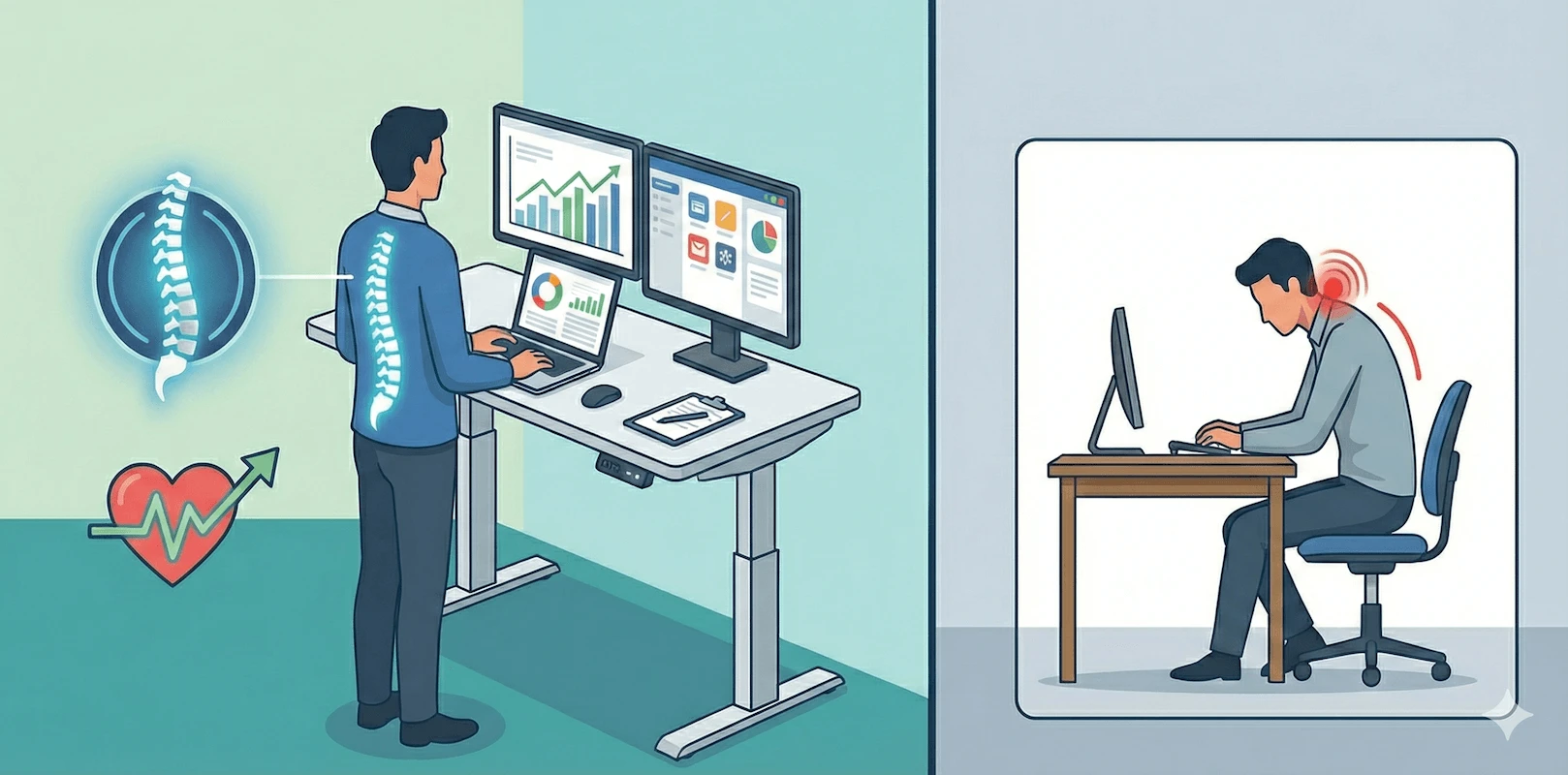
Standing desks have gone from niche ergonomic upgrades to mainstream office essentials. But while the hype is everywhere, many people still ask the same question: do standing desks really improve health and productivity?
The short answer is yes—but only when used correctly.
In this guide, we'll break down the real standing desk benefits, the science behind standing desk health, and why alternating positions throughout the day is far more effective than standing (or sitting) all day long. If you want better focus, less pain, and healthier work habits, you're in the right place.
The Problem: Sedentary Work Is Quietly Hurting You
Research paints a clear picture: office workers spend an average of 7-10 hours daily in seated positions. A 2018 study published in Occupational and Environmental Medicine found that sit-stand workstations can reduce low back pain among workers, with participants experiencing up to a 32% reduction in lower back and neck pain after several weeks of use. Research shows that sitting for more than six hours daily significantly increases the risk of neck and back pain. Even more concerning, this sedentary behavior is associated with reduced metabolic function and decreased circulation—effects that a single gym session can't fully reverse.
Modern knowledge work is optimized for efficiency—but not for the human body.
Most people spend 7–10 hours per day sitting, often without realizing how little they move. This sedentary behavior is linked to:
- Lower back and neck pain
- Reduced circulation
- Decreased energy levels
- Poor posture and muscle imbalances
- Long-term health risks associated with inactivity
Even regular exercise before or after work doesn't fully offset the effects of sitting for long, uninterrupted periods.
This is where standing desks come in—but only if used intentionally.
Standing Desk Benefits: What Actually Improves
1. Standing Desk Health: Reduced Back Pain and Better Posture
One of the most well-documented standing desk benefits is reduced lower back pain.
Standing encourages a more neutral spine position, activates core muscles, and reduces pressure on the lumbar discs. When combined with proper desk height and screen positioning, many users report noticeable pain reduction within weeks.
Key posture benefits include:
- Less slouching compared to prolonged sitting
- Improved spinal alignment
- Reduced shoulder and neck tension
That said, poor posture while standing can still cause problems—movement and variation matter.
2. Productivity and Standing Desks: More Energy, Better Focus
Another major reason people switch is productivity.
Standing increases blood flow, which helps deliver oxygen to the brain. Many users experience:
- Faster task initiation
- Improved alertness
- Fewer afternoon energy crashes
For cognitively demanding work, standing can be especially helpful during tasks like meetings, brainstorming, or reviewing documents.
This connection between productivity and standing desks isn't about standing all day—it's about using posture changes strategically to stay mentally engaged.
3. Standing Desk Benefits for Metabolic Health
While standing isn't a workout, it does increase energy expenditure compared to sitting. Over time, this can contribute to:
- Improved insulin sensitivity
- Better blood circulation
- Reduced stiffness and swelling
Even small, frequent posture changes can have meaningful long-term effects on standing desk health when combined with movement breaks.
Why Standing All Day Is Not the Answer
Here's where many people go wrong.
Standing all day can lead to:
- Leg fatigue
- Foot and heel pain
- Joint stress
- Lower back compression
Health experts increasingly agree that static postures—sitting or standing—are the real problem.
The Solution: Movement and Alternating Positions
The most effective approach is to rotate between:
- Sitting
- Standing
- Walking or stretching
- Semi-seated or perch-style positions
This keeps muscles engaged, improves circulation, and reduces strain on any single part of the body.
In other words, the best standing desk setup supports movement, not just standing.
Healthy Work Habits That Maximize Standing Desk Benefits
To get the most out of your desk, focus on habits—not just furniture.
1. Use Time-Based Intervals
Instead of relying on how you feel (which often leads to staying seated too long), use consistent intervals such as:
- 30 minutes sitting
- 30 minutes standing
- Short walking or stretch breaks every 60–90 minutes
This removes decision fatigue and creates a rhythm for your workday.
2. Optimize Your Desk Ergonomics
Whether sitting or standing:
- Screen at eye level
- Elbows at ~90 degrees
- Wrists neutral
- Weight evenly distributed when standing
Good ergonomics amplify the standing desk benefits and prevent new issues from forming.
3. Build Cues That Encourage Movement
One of the biggest challenges is simply remembering to change positions.
Work gets busy. Time disappears. Hours pass without movement.
This is where tools can help—not to control your workflow, but to gently support healthier work habits.
Some macOS users rely on lightweight interval apps that quietly notify them when it's time to sit, stand, walk, or switch to a semi-seated position. Apps like Standflow for macOS act as a coach in the background, reinforcing healthy behavior without being distracting—simply providing gentle reminders that help you maintain the movement rhythm your body needs.
Standing Desk Health Is About Consistency, Not Perfection
You don't need to stand more than everyone else. You don't need the most expensive desk. You don't need to overhaul your entire routine overnight.
What matters is consistent movement.
When standing desks are paired with intentional posture changes and gentle reminders, they become one of the most effective tools for improving daily comfort, focus, and long-term health.
Frequently Asked Questions About Standing Desks
How long should I stand at my standing desk?
The ideal approach isn't about standing for a specific duration—it's about alternating positions. Research suggests 30-minute intervals work well for most people: 30 minutes sitting, 30 minutes standing, with brief movement breaks every 60-90 minutes.
Can standing desks cause leg pain or fatigue?
Yes, if you stand all day without variation. Standing for extended periods can lead to leg fatigue, foot pain, and joint stress. A research from the University of Waterloo concluded that "replacing seated desk work postures with standing for prolonged periods of time would not be recommended." This is why movement and position changes are essential—using a standing desk correctly means incorporating sitting, standing, walking, and even perch-style positions throughout your day.
Do standing desks really help with back pain?
Studies show standing desks can significantly reduce lower back pain when used correctly. A systematic review published in Occupational and Environmental Medicine found that sit-stand workstations may reduce low back pain among workers. Standing encourages better spinal alignment and activates core muscles, reducing pressure on lumbar discs. However, the benefit comes from alternating between sitting and standing—not from standing continuously.
How many calories do you burn standing vs sitting?
According to a Mayo Clinic study, while sitting burns approximately 80 calories per hour, standing burns around 95 calories per hour—an increase of about 15 calories per hour. Over an 8-hour workday with 4 hours of standing, you could burn an additional 60 calories. While this isn't a substitute for exercise, the metabolic benefits also include improved insulin sensitivity and better circulation.
What's the best standing desk routine for productivity?
For optimal productivity, use strategic position changes: stand during active tasks like meetings, calls, or brainstorming; sit for deep focus work requiring extended concentration. A landmark 6-month study at Texas A&M found that call center employees using stand-capable desks were approximately 45% more productive than their seated colleagues. Productivity increased over time, from about 23% in the first month to 53% over the following months. Many productive users follow time-based intervals (like 30 minutes sitting/30 minutes standing) rather than relying on how they feel, which removes decision fatigue and maintains energy throughout the day.
Do I need an expensive standing desk to get health benefits?
No. While quality adjustable desks offer convenience, the health benefits come from how you use them, not the price tag. Even a basic standing desk converter paired with good ergonomic practices and consistent movement habits can deliver significant improvements in comfort, posture, and energy levels. Focus on building the habit of alternating positions first.
Conclusion: Make Your Standing Desk Work for You
The real standing desk benefits come from how you use it, not just owning one.
By alternating positions, improving posture, and building healthy work habits, you can:
- Reduce pain
- Increase energy
- Improve focus and productivity
- Support long-term standing desk health
If you already use a standing desk—or are thinking about getting one—consider adding a simple interval timer to your workflow. Tools like Standflow for macOS can be the missing piece that helps you stay consistent, remember to move, and get the full benefit from your workspace without disrupting your focus.
Your body isn't designed to stay still. Design your workday around movement—and let your desk support you, not restrict you.
Ready to build healthier work habits? Try Standflow for macOS →