A 5-Minute Desk Mobility Routine: 10 Stretches for Your Neck, Back, and Hips

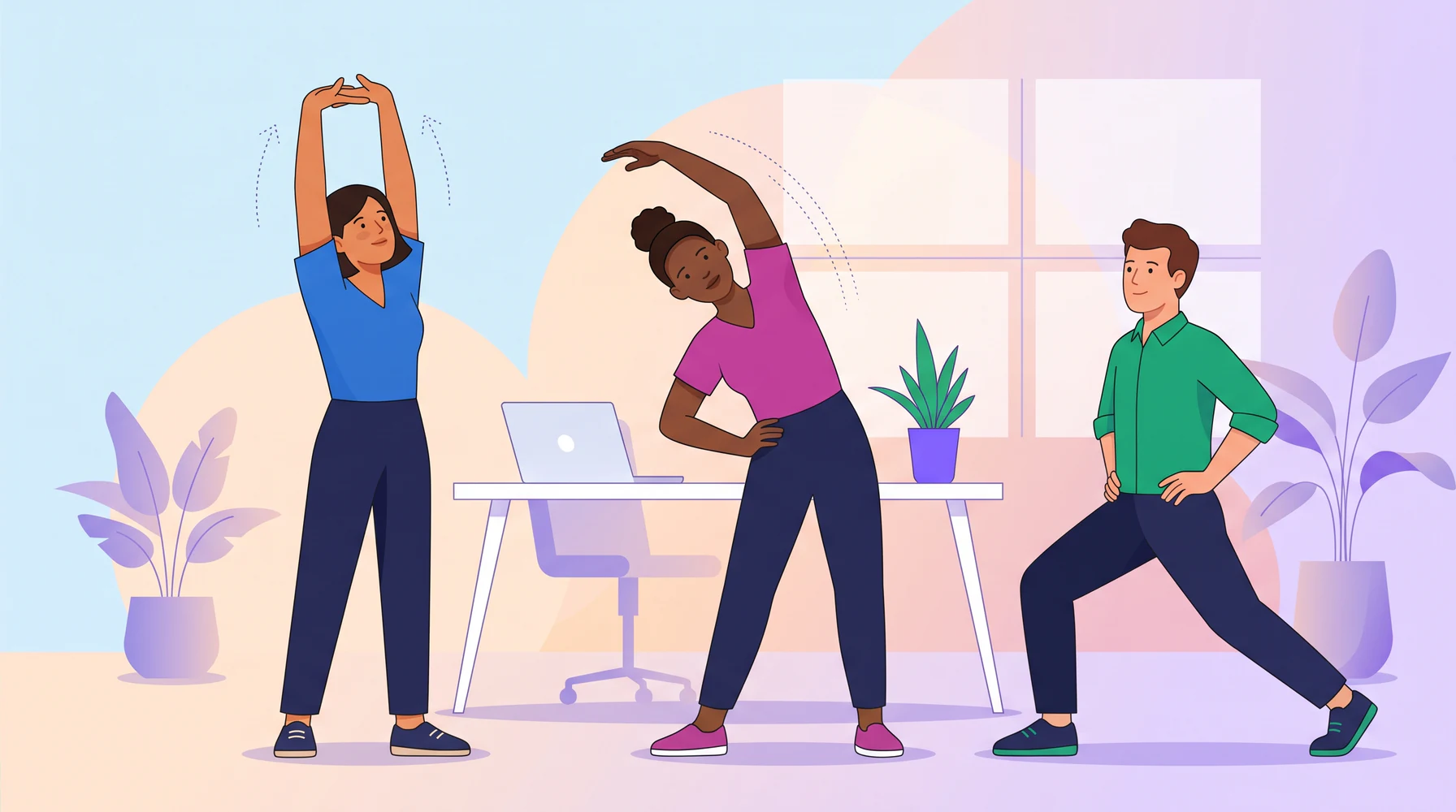
You don't need a yoga mat, a gym membership, or even a free half hour to take care of your body during the workday. You need five minutes, a little floor space next to your desk, and a reason to get up.
This guide gives you that: a 5-minute desk mobility routine with 10 simple stretches for the areas that tend to complain most after hours at a computer: the neck, shoulders, upper back, hips, and legs. Every exercise can be done in regular work clothes, most of them standing right next to your desk.
Why Mobility Matters for Desk Workers
Spending most of the day in one position, whether sitting or standing, tends to leave the body in the same shapes for hours. Over time, many desk workers notice a familiar pattern:
- Tight hip flexors from long periods of sitting with the hips bent.
- Rounded shoulders and a forward head from leaning toward a screen.
- A stiff upper back (thoracic spine) that doesn't rotate or extend much during the day.
- Heavy, restless legs from standing still or sitting without moving.
Not everyone experiences all of these, and stretching isn't a cure for pain. But regularly moving your joints through their range of motion is widely recommended as a simple way to feel less stiff, reset your posture, and break up long stretches of stillness. As we covered in our guide to standing desk health benefits, the real benefit comes from changing position often and adding movement, not from finding one perfect posture.
That's where short movement breaks come in.
How to Use This Routine
The best mobility routine is the one you actually do, and the easiest way to make that happen is to tie it to something you already have: your movement breaks.
If you use Standflow, turn on the optional Moving interval in your routine. When it comes up, the menu bar timer tells you it's time to move. Instead of checking your phone, run through the full routine below, or the 2-minute micro version if your Moving interval is short.
A few guidelines before you start:
- Move slowly and breathe normally. Mobility work should feel like gentle tension, never sharp pain.
- Don't bounce. Ease into each position and hold it, or move smoothly through it.
- Quality over range. You don't need to go as far as you can. A comfortable range done often beats an extreme stretch done once a month.
- Adapt freely. If an exercise doesn't feel right for you, skip it or swap it for another one on the list.
10 Desk Stretches for Your Neck, Back, and Hips
1. Chin Tucks
- Stand or sit tall, looking straight ahead.
- Gently draw your chin straight back, as if making a double chin. Keep your eyes level; don't tilt your head down.
- Hold for 2–3 seconds, then relax.
Reps: 8–10. Good for: counteracting the forward-head position that comes from leaning toward the screen.
2. Neck Side Bends
- Sit or stand tall with your shoulders relaxed.
- Slowly tilt your right ear toward your right shoulder, without lifting the shoulder.
- For a little more stretch, let your left arm hang down or rest your left hand on the edge of your chair.
- Hold for 15–20 seconds, then switch sides.
Duration: 15–20 seconds per side. Good for: easing tension along the sides of the neck and upper shoulders.
3. Shoulder Rolls
- Let your arms hang loosely by your sides.
- Lift your shoulders up toward your ears, roll them back, then down and away from your ears.
- Make the circles slow and as large as is comfortable.
Reps: 8–10 backward circles, then 5 forward. Good for: loosening the shoulders and upper back after long typing sessions.
4. Wall or Doorway Chest Opener
- Stand next to a wall or in a doorway.
- Place your forearm against the wall or door frame, elbow roughly at shoulder height.
- Step forward gently with the leg on the same side until you feel a stretch across the front of your chest and shoulder.
- Hold, breathe, then switch sides.
Duration: 20–30 seconds per side. Good for: opening up the chest when your shoulders tend to round forward.
5. Standing Thoracic Rotation
- Stand with your feet hip-width apart and cross your arms over your chest, hands on opposite shoulders.
- Keeping your hips facing forward, slowly rotate your upper body to the right as far as is comfortable.
- Return to center and rotate to the left.
You can also do this seated: sit tall, feet flat, and rotate gently while holding the back of your chair.
Reps: 6–8 per side. Good for: restoring rotation in a stiff upper back, which tends to move very little during desk work.
6. Standing Cat-Cow at Your Desk
- Stand facing your desk and place both hands on its edge, arms straight, feet a step back.
- Exhale and round your back, tucking your chin and pulling your belly in (cat).
- Inhale and gently arch, lifting your chest and looking slightly forward (cow).
- Move slowly between the two positions.
Make sure your desk is stable before leaning on it. A standing desk at a lower height works well for this one.
Reps: 6–8 slow cycles. Good for: moving the whole spine through flexion and extension after holding one position.
7. Standing Hip Flexor Stretch
- Stand tall and take a long step back with your right foot, as if starting a lunge. Keep your feet hip-width apart for balance.
- Bend your front knee slightly and gently tuck your pelvis under, squeezing the glute of the back leg.
- You should feel a stretch at the front of your right hip. Keep your torso upright.
- Hold, then switch sides. Use your desk for balance if needed.
Duration: 20–30 seconds per side. Good for: releasing the front of the hips, which can feel tight after long periods of sitting. If you only have time for one stretch, this hip flexor stretch is a strong candidate.
8. Standing Hamstring Hinge
- Stand with your feet hip-width apart and place your hands on your hips or on the edge of your desk.
- Keep a slight bend in your knees and a long, neutral back.
- Push your hips back and hinge forward until you feel a stretch along the back of your thighs.
- Hold briefly, then return to standing by squeezing your glutes.
Reps: 6–8 slow hinges, or hold the last one for 15–20 seconds. Good for: the back of the legs and practicing a healthy hip hinge instead of bending from the lower back.
9. Calf Raises
- Stand tall with your hands lightly on your desk.
- Rise up onto the balls of your feet, pause briefly at the top.
- Lower slowly back down.
Reps: 12–15. Good for: getting circulation going in the lower legs, especially after standing still or sitting for a long time.
10. Ankle Circles and a Short Walk
- Hold your desk for balance and lift one foot slightly off the floor.
- Draw slow circles with your ankle, 5 in each direction, then switch feet.
- Finish by walking for 30–60 seconds: to refill your water, to a window, or just around the room.
Duration: about 1 minute in total. Good for: loosening the ankles and finishing the routine with easy, whole-body movement.
Your Ready-to-Use 5-Minute Desk Mobility Routine
Here's the full sequence, timed so it fits into a 5-minute movement break:
| Time | Exercise | Focus |
|---|---|---|
| 0:00–0:30 | Chin tucks (8–10 reps) | Neck |
| 0:30–1:10 | Neck side bends (20 s per side) | Neck |
| 1:10–1:40 | Shoulder rolls | Shoulders |
| 1:40–2:30 | Wall or doorway chest opener (25 s per side) | Chest, shoulders |
| 2:30–3:00 | Standing thoracic rotation | Upper back |
| 3:00–3:30 | Standing cat-cow at your desk | Whole spine |
| 3:30–4:20 | Standing hip flexor stretch (25 s per side) | Hips |
| 4:20–4:40 | Standing hamstring hinge | Back of the legs |
| 4:40–5:00 | Calf raises | Lower legs |
| Bonus | Ankle circles and a short walk | Circulation |
Don't worry about hitting the times exactly. They're there to give you a rhythm, not to add pressure.
The 2-Minute Micro Routine for Short Movement Breaks
If your Moving interval is only 2 or 3 minutes, or you simply want something quicker, use this condensed version. It covers the neck, upper back, hips, and legs in four moves:
| Time | Exercise |
|---|---|
| 0:00–0:20 | Chin tucks |
| 0:20–0:50 | Standing thoracic rotation |
| 0:50–1:40 | Standing hip flexor stretch (25 s per side) |
| 1:40–2:00 | Calf raises |
Two minutes, several times a day, often does more for how you feel than one long stretching session at the end of the week.
Make Movement Breaks Automatic
The hardest part of any stretching routine isn't the stretching. It's remembering to do it when you're deep in focus.
That's why it helps to let a timer handle the remembering. In Standflow, you can add a Moving interval to your cycle and place it wherever it fits best, for example right after a long sitting block. The Posture Trio preset (90 minutes) already includes a moving break, and you can turn Moving on in any other preset or custom routine.
If you don't want to be interrupted mid-sentence, choose "ask me first" reminders: Standflow waits for you, and you can stay a few more minutes or get reminded in 5 before you get up. Your routine and settings stay private on your Mac.
Frequently Asked Questions
How often should I stretch at my desk?
There's no single magic number, but short and frequent tends to work better than long and rare. A few minutes of movement every 30 to 60 minutes, tied to your posture changes or movement breaks, is a practical target for most desk workers. If you're also figuring out how long to sit and stand, see our guide to the best sit-stand schedule.
Can desk stretches help with back pain?
Many people find that regular movement and gentle stretching help them feel less stiff during the workday. However, back pain has many possible causes, and stretching isn't a treatment on its own. If you have ongoing, severe, or radiating pain, talk to a doctor or physical therapist before starting a new routine.
Should I stretch sitting or standing?
Both work. Standing versions, like the ones in this routine, have a bonus: they get you out of your chair, which adds a posture change and a bit of circulation on top of the stretch. If you can't stand up, chin tucks, neck side bends, shoulder rolls, and a seated thoracic rotation all work well from your chair.
Do I need to warm up before desk stretches?
Not for a gentle routine like this one. The exercises start with small, easy movements and build gradually. Just avoid forcing any position and ease off if something feels uncomfortable.
What if my desk setup is causing the stiffness?
Stretching helps, but it works best alongside a good setup. Monitor height, keyboard position, and how you stand all affect how your body feels by the end of the day. Our standing desk ergonomics setup guide walks through the basics.
Small Movements, Every Day
A five-minute routine won't transform your body overnight. But done a few times a day, every workday, it adds up to a lot of movement that would otherwise never happen. Pick the routine, set up a movement break, and let your timer do the remembering.
A quick note on safety: move gently and within a comfortable range. Stop any exercise that causes pain, dizziness, or numbness. This article is for general information only and isn't medical advice. If you have an injury, a health condition, or persistent pain, consult a qualified healthcare professional before starting a new exercise routine.